"AI in Regulated Industries: A Practical SOP, QA and RA Guide"
If you work in life sciences, medical devices or pharma, you already know that "move fast and break things" is not an option. Your procedures are controlled documents, your records are inspected, and a single unexplained change can turn into an observation. Yet the pressure to use AI is real. Every function around you is using it, and your QA and RA teams are drowning in documents, deviations, change requests and submission paperwork that software could help with.
That tension is why AI in regulated industries is one of the most searched and most debated enterprise topics this year. The question is no longer whether regulated companies will use AI. It is how they will use it in a way that survives an audit. This guide walks through what regulators have actually said, where adoption stands, how to validate AI proportionately, and how to put AI to work on SOP management, quality and regulatory affairs without giving up control. It also explains where Higgins fits, using only what we can state with confidence.
Key takeaways
- Regulators are not asking you to avoid AI. FDA's final computer software assurance guidance (September 2025) and the FDA and EMA good AI practice principles (January 2026) both push toward risk-based, documented, proportionate controls.
- Define a narrow context of use for every AI task. Validation effort should follow risk to product quality and patient safety, not the novelty of the technology.
- Part 11 expectations (audit trails, access control, record integrity) and HIPAA obligations apply to AI workflows just as they apply to any other system that touches your records.
- The best first use cases are low-risk and high-volume: finding the right SOP, summarizing records, drafting for human review, and surfacing lessons learned.
- Keep a qualified person accountable. AI drafts and retrieves; people review, approve and sign.
- Choose an architecture where company data and intellectual property stay inside your environment and permissions are governed centrally.
Why AI in regulated industries is different
In a regulated setting a wrong answer can mean a missed reportable event or a failed inspection, which raises the evidence you need before you trust a tool.
Three features make regulated work distinct. First, procedures are the product of a controlled process. An SOP is not just a document; it is a version-controlled instruction that must be current, approved and trained on. An assistant that quotes an obsolete revision is worse than no assistant at all. Second, records must be attributable and traceable. Regulators expect to know who did what, when and why, and expect the record to be complete and accurate. A tool that generates text without a trail of its inputs and reviewers breaks that expectation. Third, responsibility cannot be delegated to software. Your quality unit remains accountable for decisions, no matter how much of the preparation was automated.
What regulators have actually said so far
Here are the primary signals that matter in late 2026. Confirm current status with regulatory counsel, because guidance changes.
Computer software assurance for quality and production software
In September 2025, FDA published the final guidance Computer Software Assurance for Production and Quality System Software (Federal Register notice dated 24 September 2025, docket FDA-2022-D-0795). It applies to software used in device production and in the quality system, whether cloud-based, on-premise or hybrid. According to law-firm analyses of the final text, the central idea is risk-based assurance: the effort you put into testing should follow the risk that a software feature's failure could compromise product quality or patient safety. Higher-risk features call for more rigorous, traceable testing, while lower-risk ones may be assured through unscripted approaches such as exploratory or scenario testing. The final version also adds more detail on relying on vendor assessments and on using digital records to reduce paperwork, and law-firm summaries note that the framework can apply to AI tools used in production or quality systems. It does not cover software that is itself a medical device or is inside one.
The QMSR is now in force
The revised 21 CFR Part 820, renamed the Quality Management System Regulation (QMSR), took effect on 2 February 2026 and incorporates ISO 13485:2016 by reference. FDA notes that exceptions that previously limited inspection of certain records, such as management review and internal audit reports, were not carried forward. For anyone introducing AI into quality processes, that is a reminder that the records produced around your tools, including validation and review records, can be inspected.
FDA on AI that supports regulatory decisions for drugs and biologics
In January 2025, FDA issued draft guidance on the use of AI to support regulatory decision-making for drugs and biological products. It proposes a seven-step, risk-based credibility framework: define the question, define the context of use, assess model risk, plan credibility activities, execute the plan, document results and deviations, and decide whether the model is adequate for its context of use. It covers AI that produces information supporting decisions on safety, effectiveness or quality, not every operational use of AI.
FDA and EMA good AI practice principles
On 14 January 2026, FDA and the European Medicines Agency jointly released ten guiding principles of good AI practice for drug development. They include human-centric design, risk-proportionate safeguards, adherence to recognized standards, a clearly defined context of use, multidisciplinary expertise, careful and documented data management, sound model design, risk-based performance assessment, life-cycle management and clear communication of essential information.
The regulatory signals in brief
Where adoption stands and what is holding it back
Adoption in life sciences is moving, but governance is lagging behind it. A global SAS study of 237 life sciences and pharma leaders and 240 health care leaders, published in March 2025, found that 58% of life sciences organizations and 46% of health care organizations were already using generative AI, compared with a 54% average across sectors. Nearly all of them (97% in life sciences) used it or planned to adopt it. But the same study found that only 14% of life sciences leaders, and 9% of health care leaders, described their AI governance framework as well established and comprehensive. Around 59% of life sciences respondents named governance as a leading concern, and 79% were uneasy about data privacy and security.
Generative AI use is ahead of AI governance
View chart data
| Item | Value |
|---|---|
| Plan to use or already using GenAI | 97% |
| Uneasy about data privacy and security | 79% |
| Currently using GenAI | 58% |
| Name governance a leading concern | 59% |
| Governance framework well established | 14% |
A risk-based way to validate AI without freezing the program
The fastest way to stall an AI program in a regulated company is to treat every use case as if it were a Class III implant. The fastest way to get into trouble is to treat every use case as harmless. A proportionate approach, aligned with the logic of computer software assurance and the FDA and EMA principles, sits between those extremes.
Start with intended use. Write one paragraph that says what the AI task is, who uses it, what data it reads, what it produces, and what decision a person makes with that output. This is your context of use. "Help associates find the current approved SOP for a task and show the source" is a context of use. "Help the company manage quality" is not.
Next, assess risk to product quality, patient safety and data integrity. Ask what happens if the output is wrong and nobody notices. If the answer is an associate wastes ten minutes, the risk is low. If the answer is a wrong disposition decision, the risk is high and you need stronger controls, which may include a mandatory independent review or a decision not to automate the step at all.
Then choose assurance activities that match the risk. For low-risk retrieval and summarization, that may mean documented intended use, supplier assessment, a set of scenario tests run by real users against known questions, and a record of the results. For higher-risk uses, expect scripted test cases, traceable results, defined acceptance criteria and formal change control for model and configuration changes.
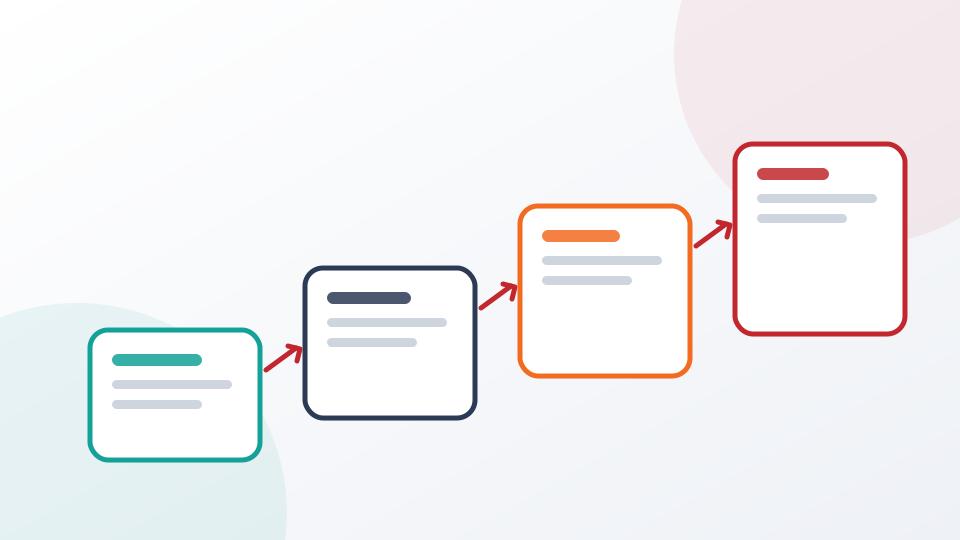
A proportionate path from idea to controlled use
- Define context of useWrite down the task, users, data, output and the human decision it supports.
- Assess riskRate impact on product quality, patient safety and data integrity if the output is wrong.
- Plan assuranceMatch test depth to risk, and document supplier and vendor evidence.
- Run and recordExecute scenario or scripted tests, capture results, and resolve deviations.
- Release with controlsApprove under change control, train users, and keep humans in the review loop.
- Monitor and re-assessTrack issues, review model or data changes, and re-test when risk changes.
21 CFR Part 11, audit trails and data integrity
Electronic records and signatures are the part of the regulatory framework most people think of first when AI comes up, and it is worth being precise. 21 CFR Part 11 sets out criteria under which FDA considers electronic records and electronic signatures trustworthy and equivalent to paper. In practice, quality teams translate it into controls such as validated systems, secure and time-stamped audit trails, access controls tied to unique users, record retention and protection, and signature manifestations that show who signed, when, and what the signature means.
Two things follow for AI. First, the AI is not the record. If an assistant helps draft a deviation summary, the controlled record is the one in your quality system, with the author, reviewer and approver captured there. The assistant should not become a back channel where decisions are made and evidence evaporates. Second, any AI feature that writes into, or reads from, a Part 11 record must respect the system's permissions and audit trail. Reading from a record the user is not entitled to see, or writing content without attribution, is a design flaw regardless of how good the language model is.
HIPAA, privacy and the cost of getting data boundaries wrong
If your data includes protected health information, HIPAA obligations travel with it into any AI workflow. The core questions are familiar: who is permitted to access the data, how it is protected in transit and at rest, whether a business associate agreement is needed with any vendor that handles it, and how you would detect and respond to an incident. In January 2025 HHS published a proposed update to the HIPAA Security Rule. As of this writing it is a proposal, not a final rule, but its preamble discusses AI and says regulated entities must be prepared to identify, mitigate and remediate AI-related risks and vulnerabilities. The proposal would also require a written technology asset inventory and network map, reviewed at least every twelve months. Whatever happens to the final text, an inventory of where AI tools touch regulated data is good practice now. Unapproved tools are the usual gap, so read our guides to shadow AI risk and control and AI governance.
The financial case for tight data boundaries is clear in IBM's 2025 Cost of a Data Breach Report. Healthcare remains the costliest industry for breaches, at an average of US$7.42 million in the United States, and it has the longest breach lifecycle at 279 days. Across industries, 13% of organizations reported breaches of AI models or applications, and 97% of those lacked proper AI access controls. IBM also found that high levels of shadow AI added an average of $670,000 to breach costs, and that 63% of breached organizations either had no AI governance policy or were still developing one.
Healthcare breaches are slow and costly
View chart data
| Item | Value |
|---|---|
| US healthcare average | $M7.42 |
| Global average, all industries | $M4.44 |
SOP management: the natural first use case
If you are looking for the most defensible starting point for AI in regulated industries, look at SOP management. It is document-heavy, repetitive and measurable, and the risk can be controlled by design: the assistant retrieves and cites approved content, and people remain responsible for decisions.
Consider the daily friction. An associate on a line, in a lab or at a regulatory desk needs to know what the current procedure says about a nonconforming material, a gowning step, a change notification or a form to use. They search a document management system, a SharePoint site and a shared drive, then ask a colleague. Each step risks reading the wrong revision. An assistant connected to the controlled SOP repository can answer the question in plain language, link to the exact section and revision, and show the approved form. That is faster, and because the answer is anchored to the source, it is easier to review.
Good SOP assistance covers several tasks beyond lookup:
- Finding and comparing. Which procedures reference this equipment, supplier or form? What changed between revision C and D?
- Training support. Generating role-based reading lists and short knowledge checks from approved content, for a trainer to review.
- Drafting for review. Producing a first draft of a revised procedure or work instruction from a change request and template, clearly marked as a draft that must go through your normal authoring, review and approval workflow.
- Gap spotting. Highlighting where two procedures conflict, where a form referenced in an SOP no longer exists, or where terminology differs across sites.
- Cross-site consistency. Helping global organizations see how a procedure is implemented at different locations so that harmonization is informed, not guesswork.
QA and RA use cases that earn their place
Lower-risk, high-volume tasks
Deviation, complaint and CAPA triage support. An assistant can summarize incoming records, suggest categories based on how similar events were classified before, and surface related prior events. A qualified person decides classification and risk. Meeting minutes and action items. Quality council, change control board and management review meetings produce decisions and tasks that need follow-through. Automated minutes and action tracking cut administrative load, and the output can be reviewed before it is filed. We discuss the follow-through side in AI project management for meetings and actions. Audit and inspection preparation. Collating where evidence lives, drafting the story of a process from approved documents, and preparing question lists from prior observations. Regulatory intelligence. Summarizing public guidance and tracking changes, with links to the primary source for a regulatory professional to verify.
Medium-risk tasks with mandatory review
Drafting regulatory correspondence and sections of submissions. An assistant can assemble a first draft from approved source documents and flag inconsistencies, such as an intended use statement that differs across documents. Every statement must be verified by the author against the source, and the submission lead owns the final text. Change impact assessment. Identifying which documents, specifications, risk files and training materials may be touched by a proposed change, to speed up a human assessment. Trending and signal review. Combining unstructured complaint narratives with structured data to highlight patterns for a cross-functional review.
Lessons learned, PLM and lab data: where combined data pays off
Many quality problems are repeat problems. The same supplier issue shows up at a second site, a design weakness resurfaces in a new product, or a fix that worked in one lab is never shared. Organizations often have a lessons-learned process in name, but the knowledge sits in free-text fields, closed investigations and slide decks that nobody searches.
A lessons-learned library built on AI changes the economics. The idea is simple. People continue to enter data in the systems they use today. The AI reads the underlying database and surfaces relevant lessons at the moment they are useful, for example when a design change is proposed, a CAPA is opened or a supplier is audited. Nobody has to fill in an extra form, which is why adoption does not depend on behavior change.
Human review is the control, not a formality
A phrase that appears throughout regulatory discussion of AI is "human in the loop," and it is often treated as a checkbox. In a regulated environment it should be designed as a real control with defined responsibilities.
Define who reviews what. A reviewer must have the competence to judge the output. A draft CAPA root cause summary should go to someone who understands the process, not to a general reviewer who can only check grammar. Define what review means. The reviewer should verify claims against the cited source, not just skim. Training reviewers on common failure modes, such as plausible but unsupported statements, helps them do that. Define how review is recorded. If the AI output influences a controlled record, the reviewer's identity and the date should be captured in that record, following your Part 11 controls.
How Higgins supports AI in regulated industries
Higgins (higgins.ai) is an enterprise AI platform described as an "Enterprise Management System AI": a federated AI layer that sits in front of your existing applications, integrates with them securely, and gives every associate one assistant for retrieving information, standard procedures (SOPs), forms and reports, summarizing email, taking meeting minutes and action items, and automating administrative work. Its tagline is "One Source of Truth AI." Here is why that design suits regulated teams.
It works with the systems you already validated. Instead of moving records into a new silo, Higgins pools and analyzes data from the server application via API, from a repository or backup of the application, or from a secondary repository, and it can use a clean internal data lake and departmental directories. Data and AI training can be refreshed daily or weekly depending on need. For QA/RA, that means the SOP repository, quality system, PLM and lab data stay the systems of record. See the integrations overview for examples such as SharePoint, Teams, ServiceNow, Veeva, Polarion, Tableau and Siemens Teamcenter.
It is built around a safe and secure environment. Company data and intellectual property are not permitted to leave the company's environment. Outside information requests go out and results return without exposing company data. Permissions and usage are governed centrally through a global standardized internal AI with usage and permissions. Higgins is designed to be approved through your IT process, including risk assessments, security testing and API security testing. The security and compliance overview sets out the details.
It is designed to support the regimes you work under. Higgins' compliance posture is described as designed to support HIPAA, GDPR, SOC 2 and 21 CFR Part 11 and similar regimes. We are careful with that wording: it is a design intent, not a certification claim, and you should confirm the scope for your deployment with the Higgins team during your own assessment.
A phased roadmap that fits a quality system
Higgins uses a phased, risk-mitigated implementation, with listening sessions at every phase so the biggest challenges are addressed first and each phase delivers something useful. That structure fits the way quality teams already introduce change.
| Phase | What it is | Typical QA/RA fit |
|---|---|---|
| Phase I | Best Practices AI for each discipline, not connected to company data. Can start immediately. | Associates learn how the assistant behaves; QA drafts acceptable-use guidance and review expectations. |
| Phase II | Junior-level assistant connected to limited company data through validated connections to common repositories such as SharePoint, Teams, Notes and ServiceNow. | SOP finding, form retrieval, meeting minutes, summaries around top-of-mind projects. |
| Phase III | Senior-level assistant connected to selected company software via APIs, such as Polarion, Veeva, Tableau and PLM like Siemens Teamcenter, combining unstructured and structured data. | Lessons-learned library, cross-system insights, trending support. |
The rollout path runs from a sandbox to a pilot trial to a beta launch. The pilot is trained on relevant randomized data to learn data structures, the solution is approved through IT, and then the trained structured AI is released with PLM and lab data. This sequence gives QA natural points to run its assurance activities: the sandbox for intended-use definition and scenario testing, the pilot for documented evaluation, and the beta for controlled release under change control. You can read more on implementation and on the enterprise platform page.
Where to go next
The most useful next step is small and concrete. Pick one SOP-heavy workflow, write the context of use, assess the risk, run a time-boxed pilot with your quality group, and record what you learn. If you also want help building the broader case, the Higgins Masterclass shows how teams are learning to use AI across functions, and the testimonials page collects feedback from people who have been through Higgins sessions. You can learn about the platform's founder, Dr. Malik Hakim, and the philosophy behind it on the About Higgins page.
Frequently asked questions
Does the FDA allow AI in quality and regulatory work?
FDA has not banned AI in quality or regulatory work. Its final computer software assurance guidance (September 2025) takes a risk-based approach to software used in production and quality systems and notes that the framework can be applied to AI tools in those roles. Separate draft guidance (January 2025) addresses AI that supports regulatory decisions about drugs and biologics. Confirm the current status of each document with your regulatory team, since guidance evolves.
Do we have to validate AI the same way as other GxP software?
You apply the same principle, which is assurance proportionate to risk, but not necessarily the same depth for every use case. Retrieval and summarization with a human reviewer is lower risk than any use where AI output dispositions product or closes a record. Document the intended use, assess the risk, test accordingly and keep the records. Your quality unit and regulatory counsel should agree the approach.
How does 21 CFR Part 11 apply to AI assistants?
Part 11 concerns the trustworthiness of electronic records and signatures. The controlled record remains the record in your validated system, with its audit trail, access controls and signatures. An AI assistant must respect those permissions, must not create untraceable back channels, and should have its own usage logging. Scope questions, such as which records are in scope, should be settled with regulatory counsel.
Is AI compatible with HIPAA?
It can be, if you keep protected health information within an approved environment, limit access by role, execute any required business associate agreements, and monitor use. HHS's 2025 proposed Security Rule update discusses AI-related risks, though it is not final. The practical steps are an inventory of AI tools touching regulated data and a policy that prohibits pasting such data into unapproved tools.
What is the safest first AI use case for a QA/RA team?
Finding and citing approved SOPs, forms and reports is usually the safest first step. It is repetitive, measurable and easy to review because every answer points to a controlled source. Meeting minutes and action items are another low-risk starting point. Add drafting, trending and cross-system insights as your controls mature.
Talk to us about your regulated environment
If you are planning AI for QA, RA, R&D or manufacturing and want a partner who starts with your controls, contact the Higgins team or write to enterprise@higgins.ai. We will begin with listening sessions, tackle your biggest challenges first and help you ship something useful in every phase, while leaving the validation judgment where it belongs, with your quality unit.
Bring Higgins to your enterprise
Connect your applications, keep your data in your environment and give every associate one trusted AI. To use Higgins you will sign in at higgins.ai.
Keep reading
Why Enterprise AI Pilots Fail and How to Reach Production
Why enterprise AI pilots fail: the 95% finding, pilot purgatory, weak adoption, poor workflow integration and data access, and a phased path to production.

"Agentic AI in the Enterprise: From Chatbots to Action"
"Agentic AI in the enterprise explained: agents vs chatbots, orchestration, guardrails, human-in-the-loop, agent-washing and a maturity model for your rollout."
Enterprise AI Governance: Security and Compliance Guide
Enterprise AI governance explained: NIST AI RMF, ISO/IEC 42001, the EU AI Act timeline, GDPR, HIPAA, SOC 2, Part 11 and the controls that keep AI safe.